Today is first ‘roza’ or fast of the Islamic month of Ramzan. All over the world, all Muslims are fasting, many of them are children and older persons too. I’m invariably apprehensive about how I’ll be able to do it. I know I can. But can I? Will I actually be able to do it? Being without food or water for over 12 hours, is no joke.
I am the kind of person, who gets into a panic if I forget to take along my water bottle anywhere; how can I be able to do it? I’ll immediately buy a bottle of water, the moment I realize. I have to keep sipping water every little while. It has been a habit of mine, all my life. So, how can I go through more than twelve hours without water? I’ve written earlier about Ramzan, you will find out more about how we do it. I’ve written herehttps://shireengheba.com/miracles-of-this-ramzan-2019/, and here. https://shireengheba.com/ramzan-css-school-and-art-classes-2018/Then there is the one I wrote during Ramzan in Corona: https://shireengheba.com/ramzan-and-corona/https://shireengheba.com/ramzan-and-corona/
How I started fasting
I know I can do it. I can, and I will, because I’ve been doing it since the age of 15 years old. It was my college friend Shehla who convinced me to keep fasting. I was of below average weight then, she said, ‘I guarantee, you won’t lose a single pound. Just keep all your fasts.’ My mother was a bit apprehensive, though as a Christian, she would keep fasts along with my Muslim Dad. So, I convinced her to let me keep my fasts. It was true, I didn’t lose any weight, in spite of fasting all the month. So, then it became a habit.
Also, you want to do it, when everyone around you is fasting. You can’t enjoy Eid-ul-Fitr if you didn’t fast during the month. It is definitely more fun, when you ‘deserve’ to rejoice, after a whole month of fasting.
Fasting can be very hard in summers
I’ve been keeping these fasts every year. In summers it becomes more than 17 hours! Somehow one does it. I’ve done it then too. I know of folks keeping these for over eighteen hours, in European countries. It is amazing.
It isn’t as if one doesn’t feel thirsty or hungry. One does, but one learns to control ones’ self. Food is lying in front of you, or people are having food, but you control your feelings, and are clear about not taking in a sip or a morsal of that tasty food. Thats the whole idea of it. Poor people do it all year round. Most of them cannot afford the food that rest of us are having. They watch us having it, knowing they can’t have it.
What if you eat by mistake?
Of course, many times, you take a sip by forgetting. Immediately, on remembering, one just spits out the food or sip of water. That’s how it is. The fast does’t ‘break’ if you take a sip forgetfully. But if its done intentionally, you will need to feed at least 60 persons food or fast for two months.
Basically, it is another level of self control.
Typical treats of Ramzan
You learn many tips and tricks of it. Best thing is knowing that it gives you confidence. If any time or anyplace in life, you are without water and food, you know very well that you can easily pass through around 17 -18 hours.
The biggest motivation of Ramzan is the futile hope of losing weight. That is shot down very easily by your first iftari.
Because the word iftari which was just meant as the breaking of the fast, ends up and a mini-feast with delicacies of all types. You are in the mood to pander to all your own and every family member’s whims due to the great sacrifice of resisting food and water all day.
So, one can’t lose weight. You don’t lose weight – definitely not if you do it in our ‘normal’ way. Our ‘normal’ way is to have lavish ‘iftari’.
‘Well, all year round we have ‘proper’ meals. So, now is the time to give ourselves and our children a break!’ says Ayesha my friend.
‘You can’t have a proper meal, if you have all those tasty savories of iftari.’ Many folks object.
‘So why have a meal anyway?’ Said my friend Ayesha Ismail. ‘Just offer lots of healthy snacks, and together they make up your meal. That’s enough. Make some nice sandwiches, along with the Dahi bhallay, pakoras, fruit chat, samosas, kebabs, why have a meal anyway?
So, what I do is, I have all the snacks, and one dish along with it. If anyone feels like having a regular meal too, that person can combine the two.
Today’s iftari is planned
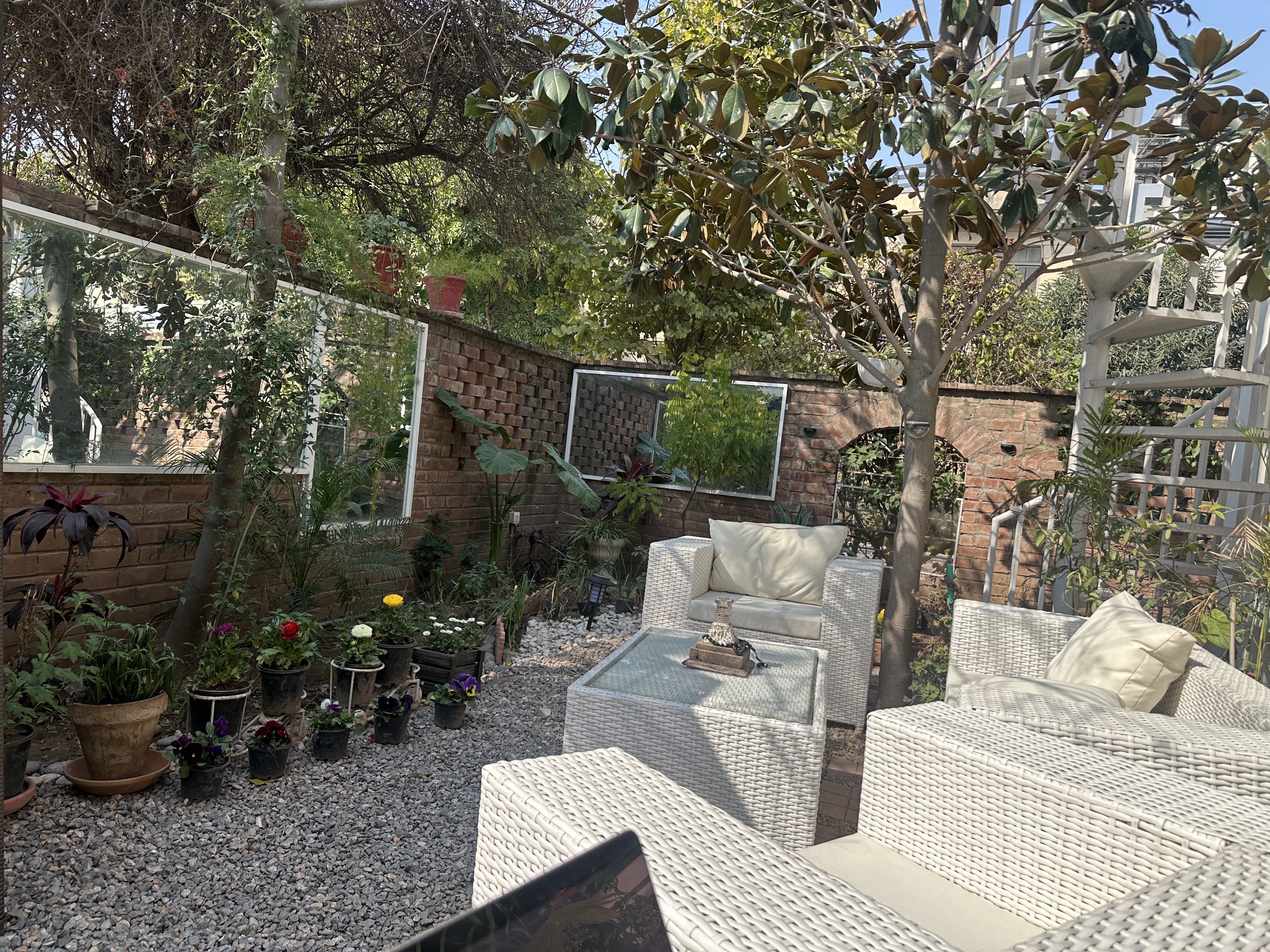
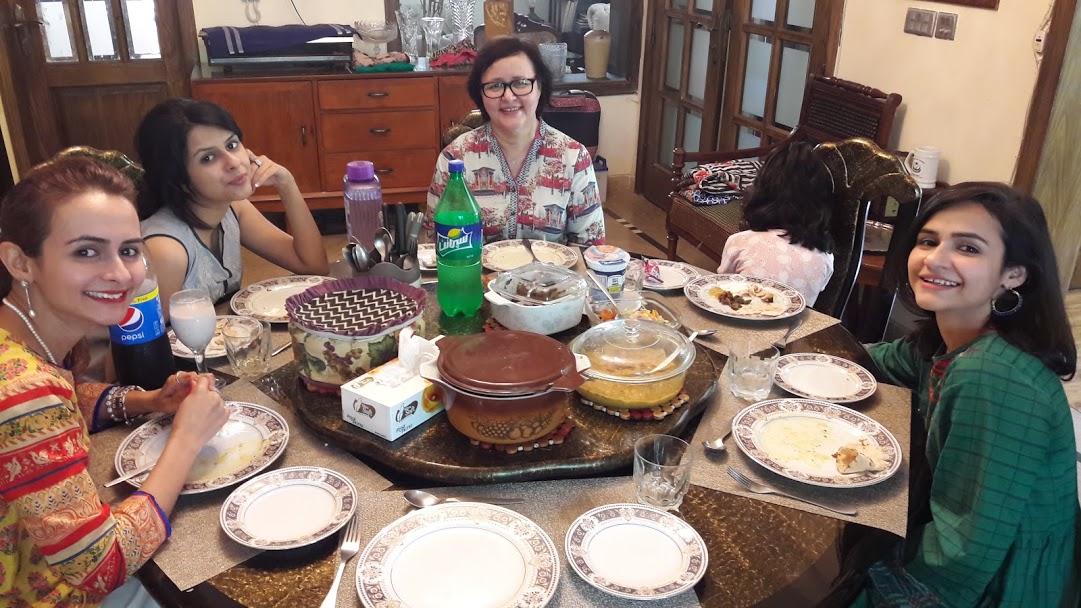
Today, my daughter Waliya will be coming along with her family and staff, so even though I had originally planned on having a light meal for iftari, this time I’ll be having my usual iftari, which I’ve always had when my husband, children and later parents were with me. The whole works. We serve it together also.
A person is free to go for prayers in between, when he or she feels like it. Rest can continue. Food is all there, each one has it as he or she pleases.
Being kind to staff during Ramzan especially
I’m very concerned about the staff also. They have kept a fast also. It is very important to serve things in an easy way for all. Once they serve all the food in one go, at the table, then they are free to have their own iftari also.
It’s a very personal matter. Most folks do it, by breaking fast with a date and a glass of juice, then praying, and having the meal afterwards. That’s more organized. However, it invariably gets out of hand by serving pakoras, fruit chat and dahi bhallay along with it. So, literally, the staff has to prepare and present two full meals within an hour! In this process, they will end up washing twice the number of plates also.
Anyhow, each to his own.
Best part of Ramzan:
- The festive feel of the whole month.
- All routines are adjusted to the fasting mode.
- It is all about giving – gifts, sadqa, zakat.
- Office and school hours are reduced.
- Sehri, for all, keeps the rest of the day free.
- However, due to differing ages and stages of family members, meals are there for the very old and very young among family members.
- First, it takes a couple of days to adjust to the new routine.
- Then, then when you get fully adjusted, there is Eid.
- Eid brings its own lavish food, and meet-ups of family, friends and relations.
- The aitekaaf, which is meditation for last ten days of Ramzan.
So what are the miracles?
- Ability to stay without food and water for over twelve hours, while working and doing normal chores of your day.
- There is so much ‘barkat’ in time. You realize how much time we waste in our normal lives in preparing meals, all days.
- You get more time to think and re-arrange your weeks, months and years of life.
- The time to contemplate is a special bonus.
- Special prayers in the form of Tarawiees, tahajjad and aiktekaaf.
- Giving more sadqa and Zakat to the poor which is obligatory as well as voluntary.
- Somehow, miraculously, you manage to have enough resources to manage it all.
- You are more engaged in conversation with God/Allah. So, you are more aware of all that is going on in and around you in your life.
- Frankly, I believe in keeping everything within balance.
- Personally, I feel that the best and most powerful thing about Islam is the fact that it is always asking for moderation in everything you do. Not to over do anything. Neither to give so much, that in the end you would be needing alms. Nor to be so stingy that you aren’t generous at all. So, stay in middle ground and that includes all speres of life.
- Prayers, giving alms, doing anything in life, it all needs to be done in moderation. Keep everything in balance. It is the same with Ramzan. Keep a middle ground for all special activities related to Ramzan and the Eid that will follow.
- I hope to do an aitekaaf too. It is a time allotted to thoughts of Allah and one’s relationship with Him. Frankly, I just cannot find enough ways to thank Allah for all His bounties that He has showered me with. How he took me out of the biggest soups I’ve been in. All those intense issues, even my MBA itself was a miracle. How I did it, and how I got my degree. A time, in aitekaaf allotted to thinking through all those conversations I’ve been wanting to have with Him.